Yesterday a patient mom came into the office wearing
braces, so I asked her who was doing her braces. She answered, “it’s a long
story. I went to this cheap place in Nyack that offered “Invisalign” for very
little money. After 2 years they told me that my treatment was complete. I told
them that they didn’t fix my bite problem. They said that “Invisalign” doesn’t
do that; I needed braces for that. After they put on the braces they told me
there was an additional fee for a new treatment. I should have just come to you
in the first place instead of looking for cheap treatment. Now I’m paying more
money and spending twice as long in treatment than if I had come to you in the
first place Dr. Okun.”
For an honest conversation about your orthodontic or TMJ issues, and an honest discussion of fees, call us at (914)253-0722 to schedule an appointment.
The following article was written in conjunction with the writers at HelloNation.
Mail-Order Aligners: Safety Questions for White Plains, NY Residents
By Dr. Judith Okun · orthodontistexpertinwhiteplainsny.org
Clear aligners can be safe and effective when they are prescribed for the right condition and monitored by a licensed dentist or orthodontist. Mail-order treatment becomes more concerning when teeth are moved without an in-person examination, appropriate imaging, or regular clinical supervision.
For residents of White Plains, NY, the central question is not simply whether the trays are made of safe plastic. The larger issue is whether the treatment plan accurately accounts for the health of the teeth, gums, jaw joints, roots, bone, and bite.
What are mail-order aligners?
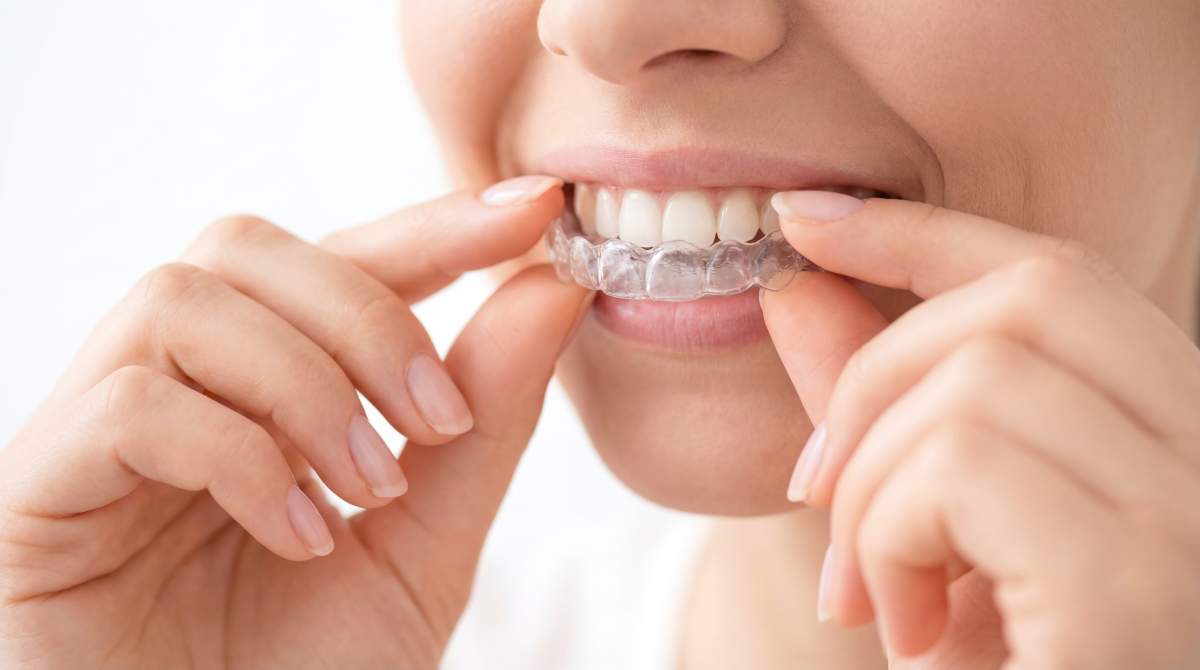
Mail-order aligners are clear plastic trays sent directly to a patient, usually after photographs, an at-home impression, or a remote digital scan. The treatment may be managed through an online portal, text messages, photographs, or virtual visits.
This model is different from conventional orthodontic care in an important way: the patient may begin treatment without meeting the supervising dentist or orthodontist in person. A remote review can be part of responsible dental care, but it does not always replace a clinical examination.
The U.S. Food and Drug Administration describes clear aligners as prescription medical devices. It states that clear aligners should be used under the supervision of a licensed dentist or orthodontist and warns that insufficient supervision may increase the risk of complications. ([fda.gov](https://www.fda.gov/medical-devices/dental-devices/clear-dental-aligners?utm_source=openai))
Why is an in-person examination important?
An in-person examination helps identify problems that photographs or impressions may not reveal. Before teeth are moved, a dental professional may need to evaluate:
Tooth decay, cracked teeth, defective fillings, or crowns
Gum inflammation, periodontal disease, or bone loss
The position and shape of tooth roots
Jaw development and the relationship between the upper and lower teeth
Existing bite problems, tooth wear, or signs of clenching
Missing teeth, impacted teeth, implants, or other dental work
X-rays may also be appropriate. They can show the roots and supporting bone, which cannot be assessed reliably from a smiling photograph.
A treatment plan that focuses only on making the front teeth look straighter may overlook how the teeth meet during chewing. Orthodontic movement changes the surrounding bone and supporting tissues, so the goal is not merely cosmetic alignment. It is also stable, functional movement that does not create new problems.
What risks are associated with unsupervised or lightly supervised treatment?
The risks vary by patient, but poorly planned or poorly monitored aligner treatment may contribute to:
New or worsening bite problems
Gum irritation, cuts, recession, or tissue pressure
Tooth movement that does not match the plan
Increased tooth looseness or damage to supporting structures
Pain in the teeth, jaw muscles, or jaw joints
New spaces between teeth
Worsening crowding or uneven contact between teeth
Problems involving crowns, fillings, or implants
The need for corrective or retreatment care
The FDA has received reports involving direct-to-consumer aligners in which patients experienced dental pain, jaw pain, bite changes, worsening misalignment, and newly developed gaps. It also notes that adverse reactions may include swelling, irritation, and lacerations. ([fda.gov](https://www.fda.gov/medical-devices/dental-devices/clear-dental-aligners?utm_source=openai))
A poor-fitting tray can press against the gums or fail to move teeth as intended. The American Dental Association warns that improperly fitting appliances may contribute to gum injury, tooth misalignment, tooth loss, and temporomandibular joint problems. ([ada.org](https://www.ada.org/resources/ada-library/oral-health-topics/home-care?utm_source=openai))
Are online photographs or at-home impressions enough?
Usually, they are not enough to establish a complete orthodontic diagnosis. At-home impressions can contain distortions, air bubbles, missing areas, or other errors. A small inaccuracy may affect how an entire series of trays fits.
Photographs also have limits. They cannot show tooth roots, bone levels, hidden decay, or the full way the teeth contact one another. Even a person with apparently mild crowding may have a more complex bite or a dental condition that should be addressed before orthodontic movement begins.
This does not mean every remote tool is unsafe. Digital scans and virtual communication can support care when they are combined with appropriate examinations, records, and follow-up. The concern is using remote information as a substitute for essential diagnosis.
How can someone evaluate an aligner program before starting?
Ask specific questions rather than relying only on claims such as “doctor-directed” or “FDA registered.”
Important questions include:
Will a licensed dentist or orthodontist examine the patient in person before treatment?
Are dental X-rays recommended when clinically appropriate?
Who is responsible for the diagnosis and treatment plan?
Can the supervising clinician be identified and contacted?
How often will progress be checked in person?
What happens if the trays do not fit or the teeth stop tracking?
Who manages gum disease, cavities, broken dental work, or unexpected pain?
Is the product FDA-authorized for its intended use?
The FDA distinguishes between a manufacturer being “FDA registered” and a specific device being reviewed and authorized for marketing. Registration alone does not mean the product has been cleared or approved for a particular use. ([fda.gov](https://www.fda.gov/medical-devices/dental-devices/clear-dental-aligners?utm_source=openai))
Who may not be a good candidate for mail-order treatment?
People with active cavities, gum disease, significant bone loss, impacted teeth, complex bite problems, major rotations, missing teeth, extensive dental restorations, or jaw growth concerns may require more comprehensive evaluation. Clear aligners themselves are not appropriate for every orthodontic problem. The FDA notes that they are commonly used for mild to moderate concerns, while more complex conditions may require traditional braces, additional dental treatment, or another approach. ([fda.gov](https://www.fda.gov/medical-devices/dental-devices/clear-dental-aligners?utm_source=openai)) Adults should be especially cautious about assuming that straight-looking front teeth indicate a simple case. Previous orthodontic treatment, gum recession, worn teeth, crowns, and long-standing bite changes can affect the treatment plan.
What symptoms should not be ignored during treatment?
Mild pressure or temporary speech changes can occur with aligners. Persistent or worsening symptoms deserve attention, however. Prompt dental evaluation is appropriate for:
Severe or ongoing tooth pain
Swelling, bleeding, or significant gum recession
A tray that cuts into the gums or cannot be fully seated
A bite that suddenly feels uneven
New jaw pain, locking, or difficulty opening
A loose tooth or a new gap
A cracked filling, crown, or other dental restoration
Continuing to advance through a series of trays despite these symptoms may make the problem harder to correct. The FDA advises patients experiencing new or worsening symptoms to contact a dentist or orthodontist for evaluation. ([fda.gov](https://www.fda.gov/medical-devices/dental-devices/clear-dental-aligners?utm_source=openai))
Does remote monitoring make aligners safe?
Remote monitoring can be useful, particularly for communication, reminders, photographs, and some progress checks. It does not automatically provide the same information as an in-person examination. The safer question is whether remote care is being used as one part of supervised orthodontic treatment or as a replacement for diagnosis and clinical oversight. The American Association of Orthodontists and the American Dental Association have both raised concerns about treatment that begins without an in-person examination, appropriate records, and ongoing supervision. ([ada.org](https://www.ada.org/about/governance/current-policies/direct-to-consumer-dental-services?utm_source=openai)) For households managing busy schedules, school calendars, work demands, winter weather, or travel, convenience can be a real consideration. Convenience should still be weighed against the practical difficulty of obtaining timely care if a tray causes pain, damages the gums, or changes the bite.
A reasonable safety standard is straightforward: teeth should not be moved based only on appearance. The treatment should begin with an appropriate diagnosis, use a device authorized for its intended purpose, and include a clear plan for monitoring problems throughout care.
It's
fall again, and we are all getting back into school and work routines.
What non-allergy sufferers don't realize is that autumn is also Hay Fever
Season. This is the season when allergy sufferers experience congestion,
coughing, sneezing, sinus infections, and sinus pain. Sometimes the sinus infections
cause tooth pain because the fluid in the inflamed sinuses exerts pressure on
the roots of the top back teeth (which sit directly beneath or inside the
maxillary sinuses.) Nasal and sinus congestion also makes it difficult to
breathe through the nose so patients resort to mouth breathing. Sleep
quality decreases, and the open mouth posture changes the muscle balance of the
face. The inward pressure of the lips and cheeks is not counterbalanced by the
tongue which is not properly postured against the palate. Over time, this
causes a narrowing of the dental arch form and dental crowding. The lip muscles
which are not used to close the lips become atrophied, it becomes difficult to
close the lips, and the profile changes.
Sinus rinsing is a great way to decrease sinus congestion before the congestion leads to an infection. The warm volume-saline-rinse washes out accumulated mucus and allergens while it decreases inflammation of the sinus lining. Neti-pots and Neil-Med bottles are both delivery systems that can be used for sinus rinsing, but the head posture is different for each system. The Neti-pot requires the user to tip the head to the side. This can trigger TMJ pain. The Neil-Med system requires the user to tip the head forwards, which is more comfortable for the neck muscles and Tempero-mandibular joint. Eight ounces of warm pre-boiled water is mixed with a measured packet of buffered salt, and is delivered into the nose by inserting the tip into one nostril and squeezing the bottle gently. When the nose is clear, the water comes out of the opposite nostril. If the nose is congested, simply remove the delivery device and let it drip out of the same nostril. Then blow your nose, and repeat. (My shortcut is to save pre-boiled water in a clean tempered glass jar after boiling it for another purpose. Then when you add 2 ounces of freshly boiled water to 6 ounces of the saved room temperature pre-boiled water, the correct temperature is achieved without having to wait for it to cool.) My patients who have started daily sinus rinsing, at least through their worst allergy seasons, have less nasal congestion, fewer sinus infections, and breathe through their noses more consistently. They also stop coughing up mucus because they have eliminated the post nasal drip, and they experience better quality sleep. (See my post 4/2/2019 "Headaches and Sinus Rinsing".)
Many parents fear the dreaded white spots.They ask regularly during their child’s
orthodontic treatment if their child is getting white spot lesions. What they
often forget is that the white spot lesions are not from the braces. They are
from not keeping the teeth clean enough, and they can happen with or without
braces.
White spots on teeth are actually white scars, and once they
appear, they may become permanent.The
white spots are the first step in the caries process; white spots become
cavities. Poor oral hygiene allows plaque to build up on the tooth
surface.Maintaining adequate hygiene is
even more difficult when braces are present because the brackets create hiding
places for this bacterial accumulation.The bacteria in the plaque eat the food which is left on the tooth
surfaces; they especially like to eat sweet and sugary foods. The bacteria then
“poop” on the teeth. This acidic bacterial excrement can erode or “decalcify”
the enamel surface of the teeth.Demineralization
(a decrease in the mineral content of the enamel) can happen on the surfaces
you can see, but it can also happen between the teeth if dental floss or
waterpik irrigation is not used daily. (The decalcifications between the teeth
are seen on x-rays as “incipient lesions”, i.e. early cavities.) As fluoride and the natural minerals of your saliva
fight to keep the enamel strong, the decalcified areas are recalcified.This process of decalcification and
remineralization creates unsightly color changes (both white spots and dark
areas) of the tooth surface.
White spot lesions are also common in people who have dry
mouth issues.Reduced saliva flow lower’s
the mouth’s natural ability to neutralize the acids. Many people with dry mouth
“self -medicate” with lemon drops. Although the lemon drops increase salivation,
they also feed the bacteria on the tooth surface as well as increase the mouth’s
acidity directly (lemons are acidic). Both acid from the bacteria, and acid
from the food increase demineralization of the tooth surfaces. Remember, this
demineralization is the first step in tooth decay. A better option to increase
salivary flow would be using xylitol candies and sprays, such as Xylimelt dry
mouth lozenges or Carifree spray, because xylitol inhibits bacterial growth.
Another factor in white spot lesions, in addition to
accumulation of bacteria, is the application of dietary acid straight on tooth
surfaces. Many foods and beverages are acidic.When people sip a lot of acidic beverages, like carbonated beverages
(seltzer and soda), lemonade, sports drinks, tea with lemon, or coffee, they
bathe the tooth surfaces in acid. The longer the period of time during which
the acidic beverage is applied, the more damage it does.This is why Dr. Okun recommends drinking the
acidic beverages with a meal so that there is increased salivary flow as well
as other foods to decrease the acidity of the mouth. She also recommends
limiting the time that sugary foods are in the mouth. (Eat a cookie and then
rinse out rather than suck on a candy or lick a lollipop for more than 10
minutes.) Dr. Okun recommends rinsing with water after eating or drinking, to
wash the food particles and acid off of the teeth. It is also beneficial to
rinse with fluoride daily to strengthen the tooth surfaces and to help the
teeth re-calcify following acid attacks.
For help with proper cleaning of the teeth, see our hygiene
videos on our website https://www.okunortho.com/brushing-and-flossing.Be sure to brush thoroughly at least two
times a day, and either floss or use the “Waterpik” dental irrigator daily to
clean between the teeth.
Orthodontic treatment is a carefully planned process that focuses on both
function and appearance. Patients often ask how long orthodontic treatment with
braces or aligners like Invisalign will take, and the answer depends on several
individual factors. While the average orthodontic treatment timeline is about
two years, each case follows a unique path based on the patient’s needs.
In many cases, traditional braces are worn for 18 to 30
months. This timeframe allows for gradual, controlled tooth movement that
protects the health of the gums and bone. Some patients may complete treatment
sooner, especially if alignment issues are mild, while more complex cases (such
as those with impacted teeth) can take longer.
Aligner treatment timelines (for example, Invisalign or
Spark clear aligner systems) are often similar, though they can vary depending
on how consistently the aligners are worn. Most Aligner (Invisalign or Spark)
patients receive a series of custom trays designed to shift teeth step by step.
Each set is typically worn for one to two weeks before moving to the next,
creating steady progress over time.
Age plays a role in how long orthodontic treatment takes.
Younger patients often respond more quickly because their jaws are still
developing, making tooth movement more efficient. Adults can achieve excellent
results as well, though treatment may take slightly longer due to denser bone
structure.
Consistency is one of the most important factors influencing
treatment duration. Following instructions, such as wearing elastics with
braces, or wearing aligners for the recommended hours each day or maintaining
proper care with braces, helps prevent delays. Missed appointments or
inconsistent habits can extend the overall timeline.
Orthodontic treatment moves at a pace that protects
long-term oral health, not just the speed of results. This approach ensures
that teeth are correctly positioned and remain stable after treatment. Rushing
the process can lead to complications or relapse, which may require additional
correction later.
Patients in Westchester County (including White Plains, Rye, Rye Brook, and Port Chester) often ask how their
local orthodontic treatment timeline compares to national averages. In most
cases, the duration is similar, as orthodontic principles remain consistent
regardless of location. What matters most is the individualized treatment plan
created after a thorough evaluation.
Regular check-ins allow orthodontists to monitor progress
and make necessary adjustments. These visits are essential for keeping
treatment on track and addressing any concerns early. Whether using braces or
Aligners (such as Invisalign or Spark clear aligner systems), small changes
over time lead to meaningful, lasting improvements.
Ultimately, orthodontic care is an investment in both health
and confidence. While two years may seem like a long commitment, the gradual
process is designed to deliver stable, functional results that last well beyond
the treatment period.
Keywords Used: orthodontic treatment timeline, how long do
braces take, Invisalign treatment timeline, braces duration, orthodontic
treatment White Plains, NY, average braces time, Invisalign aligners
Changing your eating habits is one of the most difficult adjustments when wearing braces. Some foods are more likely to damage your braces and your teeth than others. I advise patients to avoid:
1. Candy and other high sugar content foods, especially if they will spend a long time in your mouth. Eating a cookie and then rinsing with water will do much less damage than sucking a sugar candy for 10 minutes. The bacteria in your mouth will eat the sugar and give off acid which will decalcify the tooth surfaces.
2. Soda (all carbonated beverages i.e. carbonic acid) and other acidic beverages (like lemonade, fruit smoothies, and energy drinks.) Acid will decalcify (eat away) the part of your teeth that are not covered by the brackets, leaving a change of color which will later finish turning into a cavity. If you drink the acidic beverage be sure to rinse it off your teeth with water instead of leaving the residue in your mouth.
3. Sticky things like chewing gum, taffy, Ike and Mikes, gummy bears, and caramels will bend the metal. This will cause the glue to crack underneath the brackets and bands. As the cracked glue washes out the metal pieces will come loose. The sticky things will also deform the wires, causing the bent wires to push the teeth to incorrect positions.
4. Foods with a hard back (ribs and corn on the cob) should be separated from the hard back (the bone and the cob) in order to not break off the front brackets.
5. Hard and Doughy Foods that have resistance to bite into should be cut thin. Don't bite straight into an apple, carrot, bagel, pizza crust, or fat sandwich. Cut them into thin pieces before eating. Also, eat one piece at a time. One potato chip will not break your braces, but a handful all-at-once may.
6. Energy and Power bars are too hard and chewy. Cereal bars and thin snack bars are better choices, especially if you break them into small pieces before putting them into your mouth.
7. Seeds and popcorn (with a husk) should be avoided when wearing a palatal expander because the small hard pieces get stuck between the plastic and the palate causing a wound.
The link for the article which I wrote for HelloNation (and which they edited, i.e. changed) is below, followed by a screenshot of the first page.
It's never too late to wear braces. We can improve alignment and function at any age, but there are some ages that are more ideal than others. For example, I cannot change the bone structure in an adult, but I can change it in a growing patient. Palatal expansion (changing the width of the upper arch) is most effective below age 12 for a girl, and below age 14 for a boy. Headgears can restrain growth of the upper jaw, but only if there is more growth available, therefor starting by age 8 is more efficacious. If treatment is started after facial growth is finished we are more likely to need to remove adult teeth or reshape the existing teeth in order to achieve alignment. Treating adults limits the facial and jaw balance that can be achieved.
HelloNation published my first article on the best age to start braces. Unfortunately, working with them also means accepting their edits to match their writing style. The photos in the hello nation articles are theirs too. Here is the link and a screenshot to the first page of the article.
When I was a teenager, my father arranged for me to observe
dentists in several dental offices, in order to convince me that dentistry was
not what I wanted to do for my livelihood.My parents’ plan backfired.I
loved what I saw, and knew in my heart that I would be a good dentist. Some of
what I heard, however, did not sit well with me.One dentist, in response to his patient’s
concern about her bleeding gums, stated “everybody’s gums bleed.” NO! Everybody’s
gums do not bleed, and they should not bleed.
If your hands bled when you washed them, you would be
concerned.You should also be concerned
if you clean your teeth and your gums bleed.Bleeding gums are sick gums.
Healthy gums are light pink in color, are flat to the tooth
surface, come to a neat point between the teeth, and are stippled like an
orange peel.Sick gums are more red in
color, especially around the necks of the teeth, they are rolled like a bagel
near the tooth surface, the triangular areas between the teeth are bulbous
(they puff out) and the surface is shiny. The first stage of gum disease is
gingivitis, the inflammation in the gums that creates the red appearance, that
allows the gum tissue to flop in the breeze, and which bleeds when you brush,
floss, or touch it. The more you avoid touching it, the more the bacteria build
up, the more the tissue reacts to the toxins from the bacteria, the worse the
inflammation gets.You can only break
the cycle by brushing and flossing (or brushing and irrigating with a water-pik.)If your gums are bleeding they are saying,
“Help, I’m sick. Please clean me.” If you continue to neglect your gums, the
disease process will progress to periodontitis.Now the whole attachment around the teeth is inflamed, and the bone that
holds the teeth in your mouth starts to go away so that the necks of the teeth
start to stick out of the gums. Over time the teeth also get loose, and some
will fall out.Gum disease is the
leading cause of tooth loss in adults.
If you move teeth orthodontically, or with mouth habits like
leaning your tongue on your teeth or sucking your thumb, and your teeth are not
clean, you are at risk of accelerating the damage caused by gum disease.For information on how to clean your teeth,
watch our hygiene videos on-line at https://www.okunortho.com/brushing-and-flossing
Spring is in the air (the snow is starting to melt). Soon all the seedlings will sprout and
new plants will crop up everywhere.If
only it were so easy with teeth.We only
get two sets.Most of the time, if
everything is normal, we grow a total of 20 primary teeth.These baby teeth are replaced between the
ages of five and twelve (on average) with adult teeth.New adult teeth also erupt distal to (further
towards the back of the mouth than) the full set of primary teeth. The total
number of permanent teeth, including wisdom teeth which erupt in adulthood, is
32.We do not get replacements for the “second
set.”Despite the fact that we call
adult teeth “the permanent dentition”, if we don’t take care of these adult
teeth they do not last for a lifetime. Neglect can lead to a lifetime of
restoring the damage with fillings, gum grafts, and replacement teeth (bridges,
implant crowns, and dentures.)
In my recent agricultural volunteer experiences, I have
learned that growing plants is not effort-free. It is not simply waiting for new
plants to crop up everywhere. In addition to planting seeds in containers, clearing
and fertilizing the fields and planting the seedlings in the ground, keeping
the plants well-watered, and weeding out the unwanted vegetation, the plants
need pruning (removing extra leaves that are sapping nutrients and removing
extra fruits that are too heavy for the plant), pests have to be kept away from
the plants, the plants need to be protected from the weather, and the fruits
need to be harvested, boxed, and sent to market. (Did you know that cauliflower
gets sunburned [i.e. it turns brown] if it gets too much sun?The farmers need to bent the leaves over the
head of the cauliflower daily to keep the cauliflower white.) Farmers don’t
just plant the seeds and harvest the fruit.
People have to take care of their oral health with just as
much effort.We need to properly brush
and floss to remove bacteria from our teeth daily in order to prevent cavities
and gum disease.We can also use other
aids for cleaning our teeth like the Waterpik Dental Irrigator and ultrasonic
electric toothbrushes like the Philips Sonicare toothbrush. Many of us need to
use fluoride rinse daily to strengthen the enamel to resist decay and
discoloration. We can use special rinses to keep the gums healthy (examples are
The Natural Dentist Healthy Gums rinse, StellaLife VEGA rinse, warm salt water,
or a combination of hydrogen peroxide and water.) We need to visit our dentist
every 6 months to make sure that we are keeping the disease processes at
bay.If we are having issues, like
cleaning the crooked teeth, or having enough space for the adult teeth to erupt
properly, we need to visit the orthodontist to make the teeth easier to
clean.The orthodontist also puts the
teeth into their best positions to withstand the functional forces of chewing
and talking.If we have parafunctional
habits that put excessive forces on our teeth, we need to have the orthodontist
make acrylic devices to wear on our teeth at night to protect our teeth from
habits like grinding our teeth, leaning our tongue on our teeth. We also need
to break habits like chewing our shirtsleeves, sucking our fingers, or biting
our pens. Keeping teeth for a life-time is a lot of work!
Valentine’s Day is coming and millions of Americans are planning
to take their loved ones out to eat, buy them flowers, and buy them
jewelry.Relationships take effort and
time to maintain, even relationships with family members, friends and
co-workers.
Teeth also take effort and time to maintain. We need to clean
them effectively (brushing and flossing daily (https://www.okunortho.com/brushing-and-flossing)
is the number one priority, because all diseases of the mouth are caused by the
bad bacteria which build up when you don’t clean effectively. Eating fewer
sugary things, keeping the time that the sugar is bathing your teeth to a
minimum, and rinsing the sugar off your teeth after eating, will all help to
minimize dental decay.Eating fewer
acidic things, and rinsing after having acidic beverages (like carbonated
beverages, fruit smoothies and sports drinks) will help to keep decay and
erosion to a minimum.
Teeth that are well aligned are easier to clean than teeth
that are crowded. Dr. Okun will happily show you how to clean difficult areas,
but she will also recommend orthodontic treatment (braces) when it is indicated
for the longevity of your teeth. Properly aligned teeth are in positions and
angulations that help them to function at their best, and to hold up to the
functional forces of chewing and speaking. But even well aligned teeth have
trouble holding up to excessive forces that are generated by clenching and
grinding your teeth (bruxism) and generated by leaning your tongue on your
teeth at rest or when swallowing (tongue thrust).Obviously, it’s best to eliminate these
damaging habits, but it’s impossible to monitor habits when you are sleeping.Therefore, if Dr. Okun diagnoses you with one
of these habits, she will recommend that you wear acrylic appliances (such as a
hard full occlusal coverage maxillary guard, or a Hawley retainer) at night
(indefinitely) to protect your teeth and their supporting structures from these
damaging habits.
(NOTE: This blog was written in January, and did not post on it's scheduled post date. Sorry it's late.)
How did you celebrate New Year’s? Did you curl up with a
book, watch a movie on TV with your family, or go out with friends?
Human beings are social creatures.We often share our special occasions with
other people.Too much “alone time”
often leads to depression. Teeth are not too different.One tooth that stands alone does not do very
well; it has too many forces applied to it from chewing, speech, and
swallowing.But if that tooth has “friends”
nearby, they can share the functional forces, and each one “suffers” less. When
orthodontists rearrange teeth to a more ideal alignment, each tooth gets less
abuse. The front teeth, with narrow edges, incise or cut the food. The corner
more pointy teeth guide the chewing forces. The back teeth, with a wide biting
surface, support the vertical forces of chewing.The back teeth also support the vertical
height of the face, while the front teeth help the tongue and lips to enunciate
(speak more clearly).
The teeth are only one component of the chewing
process.The chewing muscles, tongue,
and saliva also play a role.The muscles
help the jaws open, close, and move sideways in order to cut and crush
food.The tongue helps push food onto
the chewing surfaces so the teeth can crush the food. The saliva helps by moisturizing
the chewed food and filling it with digestive enzymes before swallowing.
There are also some “bad players” that live in the
mouth's neighborhood.Anaerobic bacteria (the ones that
live without oxygen) cause cavities and gum disease.It is our job to help our teeth by effectively
removing the bacterial build-up daily with proper home care. If we don’t remove
the bacteria effectively, within 24 hours the plaque layer gets thick enough to
provide a place for the bad bacteria to live.
If you are not sure how to clean your teeth properly, please
view our hygiene videos at https://www.okunortho.com/brushing-and-flossing.
I am writing to thank you for suggesting that I bring my
children to you for “electric medicine” treatments following their wisdom tooth
extractions.It clearly worked like a
charm to alleviate a great deal of the swelling, pain and discomfort that they
had to endure.Although my oldest two
children had all four teeth extracted at the same time, they came directly to
your office for treatment and experienced minimal swelling and discomfort for a
few days.
I was still a little skeptical that the treatments actually
worked until my youngest daughter had her teeth pulled recently.The first tooth was pulled in August and I
was unable to bring her to your office from the surgeon’s.The swelling and pain from this one tooth was
extreme and lasted more than a week.After the other three teeth were pulled this past December we took no
chances and came directly to your office.She used the “electric medicine” for the prescribed time and had no
swelling on one side and minimal swelling on the other.Within a few days she was completely
comfortable with no signs of the surgery.
We are all now firm believers in this method that noticeably
speeds the healing process.My children
used it whenever you adjusted their braces over the years and I can confirm
that this “medicine” really worked.They
never complained about pressure from their braces and the treatments definitely
healed cuts in their mouths right before our eyes.
I am no longer skeptical in the least because this last
success was not one that could be explained away by the power of
suggestion.We saw and felt the
results.I cannot thank you enough for
all your wonderful work and sage advice.
Reasons for Relapse Part 4: Reasons for
relapse: Finishing a case properly to minimize relapse
Why did my teeth shift after the braces
came off?
I often hear from patients that their teeth
moved after their braces came off and they want to know why. There are
basically 3 reasons for a failed case (that was treated well.)
1. The patient did not wear their retainers
properly. This is patient error.
2. The patient did not eliminate mouth
habits, and did not wear appliances to protect them from their mouth habits.
This is a combination of patient and dentist error (if the dentist did not make
the patient aware of their habits, and/or did not make appliances that could
protect the patient from these habits.)
3. The patient grew unfavorably. No one had
control over this one.
(4. If the teeth were not aligned in the
middle of the bone ridge, they will relapse to be centered in the ridge again.
The treating dentist had control over this reason.)
The next few blogs will address these
errors. Today we will address #4. How ideally the case was finished.
In an ideal world, teeth have certain angulations (tips) in
order to function properly.Upper front
teeth and lower front teeth should tip slightly forward toward the lips.Upper back teeth should be vertical, or have
very slight tip toward the cheeks.Lower
back teeth should be vertical or have very slight tip towards the tongue. All
of these angulations are dependent on the position of the underlying bone.
In a front to back direction, the top jaw should be very
slightly in front of the lower jaw (Class I skeletal relationship) in order to
achieve the proper anterior tooth tips.If, however, the jaws are not aligned ideally the angulation of the
front teeth can be adjusted to achieve the scissor like relationship of the top
to bottom front teeth. These adjustments are called dental compensations.Now suppose the upper jaw is too far forward
for the lower jaw (Class II).If the
teeth are angled properly to their supporting bone, the top front teeth will
stick out too far for the lower front teeth.The angulation of the teeth can be changed so that the roots can remain
in the bone, but the crowns (the visible part of the teeth) can still meet like
a scissor in the front.The top front
teeth can be tipped more toward the tongue, and the lower front teeth can be
tipped more toward the lip. These dental compensations often occur naturally,
but can also be applied by the treating orthodontist in order to achieve proper
function. Now suppose the lower jaw is too far forward for the upper jaw (Class
III). If the teeth are angled properly to their supporting bone, the top front
teeth will be behind the lower front teeth.In order to get the top teeth in front of the lower teeth, the top teeth
can be tipped more toward the lip, and the lower front teeth can be angled more
toward the tongue. Although small amounts of dental compensation are very
acceptable, large amounts of dental compensation create an unstable bite. The
teeth may try to find more favorable inclinations, and teeth that were tipped
towards the lip (creating a larger arch form) will move towards the tongue
(creating a smaller arch form) and become crowded.
Now let’s discuss the side-to-side direction.If the upper jaw is too narrow for the lower
jaw, in order to get the top teeth outside the bottom teeth (if the skeletal
base is not corrected) the upper back teeth have to be tipped towards the
cheeks, and the lower back teeth have to be tipped towards the tongue. If the
teeth are tipped excessively, the teeth will try to find a more ideal
inclination, bringing back the posterior crossbite (the top teeth bite inside the
bottom teeth.)
Some orthodontists, like Dr. Okun, like to treat orthodontic
cases early (age 7 to age 10) in order to influence the jaw bone size and
position, so that the inclinations of the teeth can be more favorable.Changing the bone structure might mean moving
the bones of the palate apart (palatal expansion), restraining the growth of
the upper jaw (traditional headgear), or advancing the growth of the upper jaw
(palatal expansion combined with a protraction headgear.) Once the supporting
structures are idealized, the permanent teeth can erupt into straight
positions. With Dr. Okun’s technique, it is rare for early treatment cases to
need a second phase of treatment.
Some orthodontists like to treat orthodontic cases later
(age 11 to 18) in order to have all of the permanent teeth present when the
case is finished. The advantage of teen treatment is that you are likely to
need only one phase of orthodontic treatment.The disadvantage is that you need to tip teeth less ideally in order to
compensate for growth that has already taken place. You also are more likely to
need extraction of permanent teeth in order to align the remainder of the teeth
in a crowded case. Relapse potential is much higher in cases that are treated
later, i.e. the teeth don’t stay in place after the braces are removed.The later the case is treated, the more
likely it is that the patient will need retainers at night forever in order to
maintain their result.
Halloween is nearing the end, and all our children will be enjoying their candy tonight. Here are some hints to preserve their teeth:
- Sticky candy will break braces and aggravate TMJ problems. If you are wearing braces or have TMJ/facial pain DO NOT EAT chewing gum, gummy bears, taffy, jelly beans, and other sticky candies. If the candy is hard to bite through, break it into very small pieces before eating it.
- Avoid eating candy that sits on your teeth a long time. A Kit Kat Bar or a Hershey's Kiss will do less damage than a lolly pop or sucking candy.
- Rinsing your mouth with water after eating candy will decrease the risk of white spots and cavities. In addition, spraying your mouth with Carifree spray or sucking a xylitol "candy" will inhibit the bad bacteria (in your mouth) that have feasted on the sugar you just ate.
- Rinsing with fluoride rinse before bed daily (especially important if candy was eaten that day) will help reverse the damage that candy does to your teeth.
- If there are already white spots (the beginnings of cavities) present, your dentist can use Curodont to help the lesions remineralize (fading the white spots.)
I often hear from patients that their teeth moved after
their braces came off and they want to know why. There are basically 3
reasons for a failed case (that was treated well.)
1. The patient did not wear their retainers properly. This
is patient error.
2. The patient did not eliminate mouth habits, and did not
wear appliances to protect them from their mouth habits. This is a combination
of patient and dentist error (if the dentist did not make the patient aware of
their habits, and/or did not make appliances that could protect the patient
from these habits.)
3. The patient grew unfavorably. No one had control over
this one.
(4. If the teeth were not aligned in the middle of the bone
ridge, they will relapse to be centered in the ridge again. The treating
dentist had control over this reason.)
The next few blogs will address these errors. Today we will
address #3: unfavorable growth.
Unfavorable growth is the growth that takes place after the
braces are removed which destroys the final bite. One jaw grows more than the
other. The teeth in each jaw may stay perfectly aligned, but the bones that
support the teeth may not stay in balance with each other.
We can all see that children look like their parents.Facial balance is also genetically
determined. Parents with “buck teeth” have children with “buck teeth”; Parents
with “underbites” have children with “underbites.” Although we can change the skeletal
balance and esthetics with orthodontic orthopedics in young patients, the
patients continue to grow after their active orthodontic treatment is
complete.A patient who started with their front teeth
sticking out “way too far” will relapse in that direction- their top jaw will
continue growing and after several years they may have front teeth that stick
out farther than when they completed treatment. This relapse growth issue is
seen most vividly in “underbite” cases. The bottom jaw will continue growing
for many years after the top jaw stops growing, so a patient who started with a
prominent lower jaw will continue growing that prominent lower jaw and the
lower jaw may “outgrow” the balance that had been achieved with the orthodontic
orthopedic treatment. In addition, lower jaw bones rotate internally, although the outside remodels and looks the same. The lower front teeth tip forward with this rotation and in order to stay behind the upper teeth, the lower teeth develop "middle age crowding."
The skull, like the rest of the body, shows early growth “high
up” and later growth “low down.”We see
this in babies who have large skulls with respect to the rest of the body
versus adults who have small skulls with respect to the rest of the body.The skull stops growing earlier than the legs
stop growing.Within the skull, the top
of the face stops growing earlier than the bottom of the face. The midface
stops growing earlier than the lower face.With orthodontic orthopedics (palatal expansion with headgear treatment)
we can modify the growth of the maxilla (upper jaw), which is in the mid-face. Palatal
expansion is successful in girls until about age 12, and in boys until about
age 14, when the midface stops growing.While
creating width of the upper jaw (palatal expansion) forces can be exerted on
the jaw to restrain the growth (traditional straight pull headgear to the top
of the head and the back of the neck) or to increase the amount of growth in
the forward direction (with front pull headgear against the forehead and chin.)
These treatments are no longer effective after the midface has finished growing
because the sutures (the zippers between the bones) close with physical maturity.
The mandible (the lower jaw which is in the lower third of the face) continues
to grow for many more years than the maxilla (upper jaw bone), until about age 17 in girls, and
until about age 23 in boys.If the
mandible was genetically programmed to be small, we do not notice the forward
growth of the mandible after the maxilla stops growing.If the mandible was genetically programmed to
be large, the forward growth of the mandible is obvious and often results in a
return of the “underbite.”
When I treat “underbite” cases I overcorrect the forward
correction of the maxilla, leaving the young patients with the opposite problem
from which they presented.They start
with the upper teeth and jaw behind the lower teeth and jaw, and I finish them
with the upper teeth and jaw too far forward for the lower teeth and jaw. An
ideal bite has the upper front teeth one to two millimeters in front of the
lower front teeth.A Class III underbite
may have the upper front teeth behind or tip to tip to the lower front teeth.I overcorrect the jaw position leaving the
upper teeth three to four millimeters in front of the lower teeth in order to
allow for up to 2mm more lower jaw growth in the future.I do not aim for a correction of over-jet to
5mm because I do not want to take the risk that the lower jaw does not have a
late growth spurt, and the final result (as an adult) remains with excessive
over-jet (seen as “buck teeth.”) Anticipating how much relapse growth will take
place is an educated guess based on family history and the appearance of the
parents.
Another phenomenon, related to unfavorable growth is the relapse
of tooth rotations and teeth that grew in to the outside or inside of the arch
form.The longer the teeth “live” in the
poor position, the more they have ingrained that “memory” of that
position.If the size of the arch form
is corrected early and the teeth grow into a straight position, the teeth are
more likely to stay in a straight position.If the jaw size is corrected and the teeth aligned within a year after
the teeth erupt, the teeth are more likely to stay in a straight position.If the jaw size is corrected as an early teenager,
the teeth already have a memory of the crooked position, and are more likely to
return to that crooked position after orthodontic treatment has been
completed.If the teeth are aligned in
adults, after facial growth is complete, the teeth are much more likely to
return to the crooked position.This is
why night time retainer wear is so important in patients whose teeth were
aligned later in life.
I often hear from patients that their teeth moved after
their braces came off and they want to know why. There are basically 3
reasons for a failed case (that was treated well.)
1. The patient did not wear their retainers properly. This
is patient error.
2. The patient did not eliminate mouth habits, and did not
wear appliances to protect them from their mouth habits. This is a combination
of patient and dentist error (if the dentist did not make the patient aware of
their habits, and/or did not make appliances that could protect the patient
from these habits.)
3. The patient grew unfavorably. No one had control over
this one.
4. If the teeth were not aligned in the middle of the bone
ridge, they will relapse to be centered in the ridge again. The treating
dentist had control over this reason.
The next few blogs will address these errors. Today we will
address #2: mouth habits.
A mouth habit is something you do with your mouth other than
talking and eating.Some examples
include biting your fingernails, biting your pen/pencil, chewing on your lips
or inside of your cheeks, leaning your tongue on your teeth, and
grinding/clenching your teeth. Any force that you exert on your teeth, if it is
applied for enough time, will move your teeth.Patients who bite their pencil consistently in the same area of their mouth
will either push the bottom tooth toward the tongue, push the top tooth out towards
the lip, or a will form a gap vertically between the top and bottom tooth where
the pencil sits. Patients who chew on their bottom lip create crowding of the
lower front teeth, or spacing between the upper front teeth.
Tongue habits can occur in different areas of the mouth. If
the tongue sits over the tops of the side teeth it can create an open bite
which is an area where the top teeth do not touch the bottom teeth when the
patient is biting their teeth together. If the tongue is leaning against the
front teeth down low, it will create spacing between the lower front teeth,
just as if it is leaning against the front teeth up high, it will create
spacing between the upper front teeth.If it is leaning between the top and bottom teeth in the front it will
create an anterior open bite, i.e. the top teeth will not overlap the bottom
teeth in the front. Sometimes the patient leans their tongue on specific teeth with
less force or duration, and instead of moving the teeth, the excessive force
generated on the teeth accelerates loss of bone and gum around the teeth.
(Periodontal disease is an inflammatory disease of the supporting structures of
the teeth- the gums and bones. It is cause by bacteria which live in the
mouth.When the bacteria are removed
frequently (by daily brushing and flossing) the inflammation levels are low,
and there is no disease.When the
bacteria are not efficiently removed, the “bad” bacteria set up housekeeping
and flourish causing inflammation which is seen as red, puffy, bleeding
gums.Over time the bone around the teeth
is lost leaving the roots of the teeth visible in the mouth.When there is excessive force applied to the
teeth, from leaning the tongue on the teeth or from clenching/grinding the
teeth, the rate of bone loss is accelerated. Then the roots start showing even in
cases where the gums are not visibly red, puffy, and bleeding.)
Bruxism is the clenching and grinding of the teeth.Clenching is when the teeth are tightly
closed when there is no reason, like chewing, to be closed.Grinding is when the patient moves the teeth “side
to side” or “front to back” as if they are chewing, but there is no food
present to chew. The most common reason for bruxism is stress, but it also
occurs from boredom, concentration on a difficult task, or when a young child
has pressure in their ears which they are trying to relieve. Bruxism does a lot
of damage to the teeth and their supporting structures (which was discussed in the post October 21, 2020.)Bruxism can also move
the teeth.When clenching, the back
teeth which meet vertically, are pushed deeper into the bone, much like a nail
can be hammered into a piece of wood.As
the posterior bite support is lost, the front teeth start to overlap more vertically
(i.e. the bite deepens), and the front teeth bypass each other (like a
scissor.)In order for the lower teeth
to stay behind the wedge shaped upper front teeth, the lower front teeth start
to crowd, and the upper front teeth start to develop spaces between them.
Habits can be controlled in the daytime through awareness,
but it is impossible to control habits like improper tongue posture and bruxism
while one is sleeping.
Retainers and occlusal guards are used in order to prevent
the shifting of teeth from mouth habits. Although retainers should be worn full
time immediately after braces are removed, they can be continued at night
indefinitely to protect teeth from habits.Mouth habit appliances should be rigid so that they can’t be deformed by
the habit-forces. The design of retainers was discussed in the August 2025
blog. Other appliance designs will be discussed in future blogs.
I often hear from patients that their teeth moved after their braces came off and they want to know why. There are basically 3 reasons for a failed case (that was treated well.)
1. The patient did not wear their retainers properly. This is patient error.
2. The patient did not eliminate mouth habits, and did not wear appliances to protect them from their mouth habits. This is a combination of patient and dentist error (if the dentist did not make the patient aware of their habits, and/or did not make appliances that could protect the patient from these habits.)
3. The patient grew unfavorably. No one had control over this one.
4. If the teeth were not aligned in the middle of the bone ridge, they will relapse to be centered in the ridge again. The treating dentist had control over this reason.
The next few blogs will address these errors. Today we will address #1: the patient did not wear his retainers properly.
In order for teeth to move with orthodontic treatment, the bone around the teeth has to remodel. The bone on the pressure side (the side to which we are moving the teeth) resorbs, and bone on the tension side (the side from which we are moving the teeth) rebuilds. Over time, the teeth are surrounded by new bone. This new bone is immature and weaker than mature bone.
Imagine that you broke a bone and went to the orthopedist to reset the bone. After aligning the bones to the best position, the orthopedist would put on a cast to hold the bones still, in that new position, until the bone fills into the break, and matures in that position. The retainer is like the cast. The teeth are slightly mobile when the orthodontic treatment is completed and the teeth need to be held in their final positions while the bone holding them matures.
A good retainer is rigid, like the cast for a broken bone is rigid. It should hold the teeth still even if the patient leans his tongue on the retainer, or if the patient clenches or grinds his teeth. Rigid retainers are made of hard acrylic, and have wires that hold them and the teeth in place.
It has become common for orthodontists to use other forms of retention. Essex and aligner retainers are non- rigid vacuum formed retainers which are less expensive to make, and are less effective because they flex when forces are applied to them. These plastic retainers also stretch out over time and need to be replaced frequently. If the treating orthodontist does not intend to provide long term retention care he may choose to use this style retainer.
It is also common for the orthodontist to "glue" the front teeth together, often with a wire or fiberglass thread that is bonded to the tongue surface of the teeth. Bonded retainers will hold the front teeth straight with respect to each other, but the bonded can move as a unit with respect to the back teeth. The bonded retainers offer no retention to the back teeth, and if the patient has mouth habits (like grinding the teeth) the retainer will break as the back teeth move vertically. Bonded retainers are difficult to keep clean, and often have issues with developing cavities and gum disease.
A removable retainer has to be worn "fully seated." If the patient lifts the retainers with his tongue, or floats it above his teeth, it cannot do it's job. If the patient repeatedly moves it in and out with his tongue he may actually make the teeth looser, rather than letting the teeth "tighten up." If the retainer is "floating" it is not contacting the teeth, and therefore cannot hold them in place. If the patient is holding the retainer in his hand, instead of wearing it in his mouth, the retainer can also not do it's job.
Retainers should be worn full time until the teeth "tighten up". This takes between two and six months. Then the wear-time should be decreased, and the mobility of the teeth should be evaluated by the orthodontist. If the retainer always feels the same when it is replaced after a period of time, as when it is replaced immediately after removing it, it means that the teeth have not moved when the retainer was out of the mouth. If the retainer feels different after it has been left out for a period of time, it means that the teeth had a chance to move somewhere, and the retainer had to push the teeth straight again. The goal is to eliminate the habits that are causing the teeth to move, in order that the teeth stay in place when the retainer is removed. Over the course of the first year the patient should be able to decrease wear-time to be only when sleeping. The orthodontist needs to evaluate whether it is necessary to continue retainers at night indefinitely, or whether the patient can discontinue night time wear of the retainers when his face finishes growing.
None of us know what will happen next with the Corona Virus
pandemic, and this uncertainty has created high levels of stress and anxiety in
the world. How we handle the stress
varies, but many of us are taking out our stress on our teeth.
Bruxism, the clenching (biting down hard when there is no
food to bite through) and grinding (rubbing the bottom teeth against the top
teeth) of teeth damages the teeth, the periodontium (supporting structures of
the teeth), and the jaw joints (aka TMJ, temperomandibular joints), and stresses
the muscles of the face that help you chew.
Some signs that you are clenching
your teeth are:
-Wearing down of the biting surfaces of the teeth
-Chipping, cracking, and fracturing of the teeth
-Abfraction, the denting of the root surface at the necks of
the teeth
-Loss of the bone that supports the teeth, so that the roots
show, despite good dental hygiene
-Tooth pain, or dead teeth (from suffocating the teeth when
cutting off their blood supply)
-Shifting of the teeth with increasing vertical overlap of
front teeth, increasing spaces between the upper front teeth, and increasing crowding
of the lower front teeth over time
-Facial pain and headaches
-Cracking noises from the joint in front of your ears when
you open and close your mouth
There is no cure for
bruxism, but you can mitigate some of the deleterious effects by:
-Making an effort to not close your teeth when you are
awake, but not eating
-Wearing a custom hard, acrylic (plastic) dental appliance
on all of your top teeth (which bites evenly on all of the bottom teeth) when you are sleeping so that you do the
damage to the guard instead of to your teeth. (Dr. Okun can make this “occlusal
guard” for you.)
-Limiting chewing (i.e. eat a softer diet that does not
contain foods that have resistance to bite through) when you are experiencing
periods of facial pain and headaches
-Using ice paks or hot compresses on the tender muscles on
the sides of your face and head
-Puffing out your cheeks, as if you are blowing bubbles, to
stretch and release tension in your chewing muscles
-Taking anti-anxiety herbs (such as Valerian, Lemon Balm, or
Chamomile) in tea or pill form before bed
No one knows what’s going to happen next. Will schools open for “ in person learning”
this month? Will gatherings of students
start a second wave of the COVID19 pandemic?
Will restaurants open for indoor dining?
Will gyms be able to meet their overhead expenses with only half the
number of clients in order to meet social distancing guidelines? Will small
businesses survive the long shut-downs? Will parents be able to go back to work
when their children are staying home for remote learning?
One thing that is certain is that uncertainty is a stress that
takes a toll on our health.
One way many of us deal with stress is by clenching and
grinding our teeth.Unfortunately
bruxism, the clenching and grinding of one’s teeth, is not benign.It wears down the surface of the teeth,
cracks and chips the teeth, accelerates the bone loss from gum disease, causes
root resorption (shortening of the tooth roots), kills the nerves in the teeth,
causes undesirable shifting of the positions of the teeth, and causes spasm of
the chewing muscles and changes in the jaw joints. (Symptomatic
temperomandibular joints and associated facial pain are often referred to as “TMJ”.) There is no cure for
bruxism, but there is something you can do to minimize the damage it
causes.
The best treatment for “TMJ” and bruxism is to wear a hard
plastic guard on all of the top teeth at night.This “occlusal guard’ should cover all of the top teeth and touch all of
the bottom teeth evenly when the teeth are closed, so that the teeth are all
splinted together and share forces evenly. That way the damage from the
excessive forces is done to the plastic instead of to the teeth and their
supporting structures. The guard should never be soft; a soft guard will allow
the teeth to rock back and forth as the plastic flexes.Although Soft guards protect the teeth from
chipping, they can accelerate the loss of the bone that keeps the teeth in the
mouth. The guard should cover every
tooth on the top, and touch as many bottom teeth as possible; that way the
teeth don’t shift, altering the bite. A
properly made custom occlusal guard is not something you can buy
over-the-counter in the drug store.Dr. Judith
Okun has years of experience treating TMJ and facial pain with properly made
occlusal guards.Call her office at
(914) 253-0722 to set up an appointment to evaluate if you are taking out your
stress on your teeth, and if you could benefit from the night time use of a
custom occlusal guard.
In a surprise announcement by Governor Cuomo on May 31, all
dental office in New York State are permitted to open June 1, 2020. We are so
excited to be able to get back on track with all of your treatments.In order to provide a safe environment for
you when you are in our office, we are following the guidelines of New York
State, the Centers for Disease Control, the Department of Health, the New York
State Dental Association, and the American Dental Association for infection
control and social distancing. Please read this letter so you know what to
expect when you come to our office.
Everyone in the building must wear a mask over their mouth and nose at all times except when it
is necessary to remove it for dental (or medical) treatment.
Call from the parking area to see if we have a room open for
you.Reception area seating has been
limited to maintain social distancing. We have also eliminated high touch items
from the reception area; there will be no blocks, books, magazines, patient
information pamphlets or game cube controllers available until the Corona Virus
is no longer a threat, so there is no entertainment waiting for you in our
office. We are making an effort to schedule more lightly to minimize wait times
and maintain social distancing; this might mean that you will be offered fewer
options when scheduling your appointment.
Only one person may accompany a patient into the
office.Please leave additional “visitors”
(siblings, friends, parents) at home.If
a second parent would like to participate in a treatment discussion, we will
include them over a video-conference medium like face time or Skype.
Take the stairs; avoid the elevators if you don’t need them.
The doors to the stairways are propped open so that you don’t need to touch
them. The elevators are limited to 2 passengers at a time.
Use the bathroom before you leave your house. We can’t
control the number of people in the building’s restrooms.
Please wait at the door to the office until there is someone
at the front desk to greet you, take your temperature, and ask you screening
questions.If you or someone with whom
you have spent time has had a fever, cough, shortness of breath, inexplicable
loss of taste or smell, or has tested positive for COVID19 in the last two
weeks, please call to reschedule your appointment. If you come with these
symptoms we will not be able to treat you and we will be rescheduling your
appointment anyway.Also, if you develop
these symptoms within 2 weeks of the time you were here, please call us so that
we can notify anyone with whom you may have had contact in our office.
Once you have passed pre-screening, you will be directed to
a sink in the treatment room for all parties to wash their hands with soap and
water.Patients will rinse with ioRinse
to minimize the number of viable microbes that may be aerosolized during
treatment procedures.IF YOU ARE
ALLERGIC TO IODINE PLEASE LET US KNOW SO THAT WE MAY GIVE YOU AN ALTERNATIVE
RINSE. Please throw paper towels in the green pail near the entrance to the
room, not under the sink.Please save
your cup in case you need it to rinse during your appointment.
After your appointment, please wait in the treatment room
until there are no other patients waiting at the front desk.Then walk to the reception room and speak to
the front desk staff through the glass window to schedule appointments or make
payments.
We look forward to seeing you again and are happy to answer any
questions you may have about the steps we take to keep you, and every patient,
safe in our practice. To make an appointment, please call our office at (914)
253-0722.
Thank you for being our patient. We value your trust and loyalty and
look forward to welcoming back our patients, neighbors and friends.
We are committed to providing patients with complete and comprehensive orthodontic care in Orthodontics & TMJ treatment in Rye Brook, New York (NY).
Your first visit to our office enables us to become acquainted with each other, and allows you to experience our warm family atmosphere. We are board-certified orthodontists, and have been proudly serving the Rye Brook community for over 30 years!
We focus our concerns on the comfort and well-being of our patients. We pride ourselves in providing complete orthodontic and TMJ (myofacial pain) care by incorporating the latest technology into your treatment, including the Electro-Acuscope/Myopulse System for pain management, traditional metal braces, clear braces, lingual braces, and Invisalign® (“invisible” braces). We also fabricate custom athletic mouth-guards to protect teeth and jaws from impact during sports and martial arts.




 Posts
Posts

